Chiang Mai CCS Presents Research at SPE Asia Pacific CCUS Conference and Exhibition 2025 in Malaysia
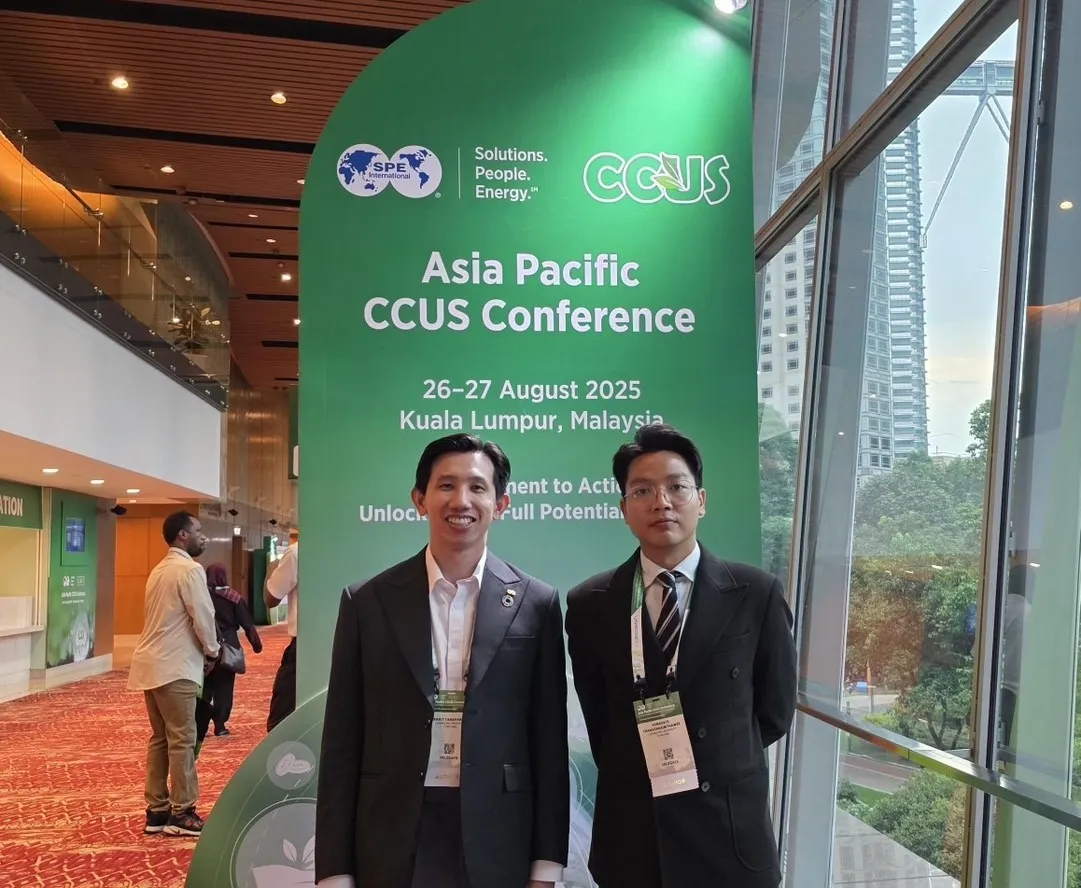
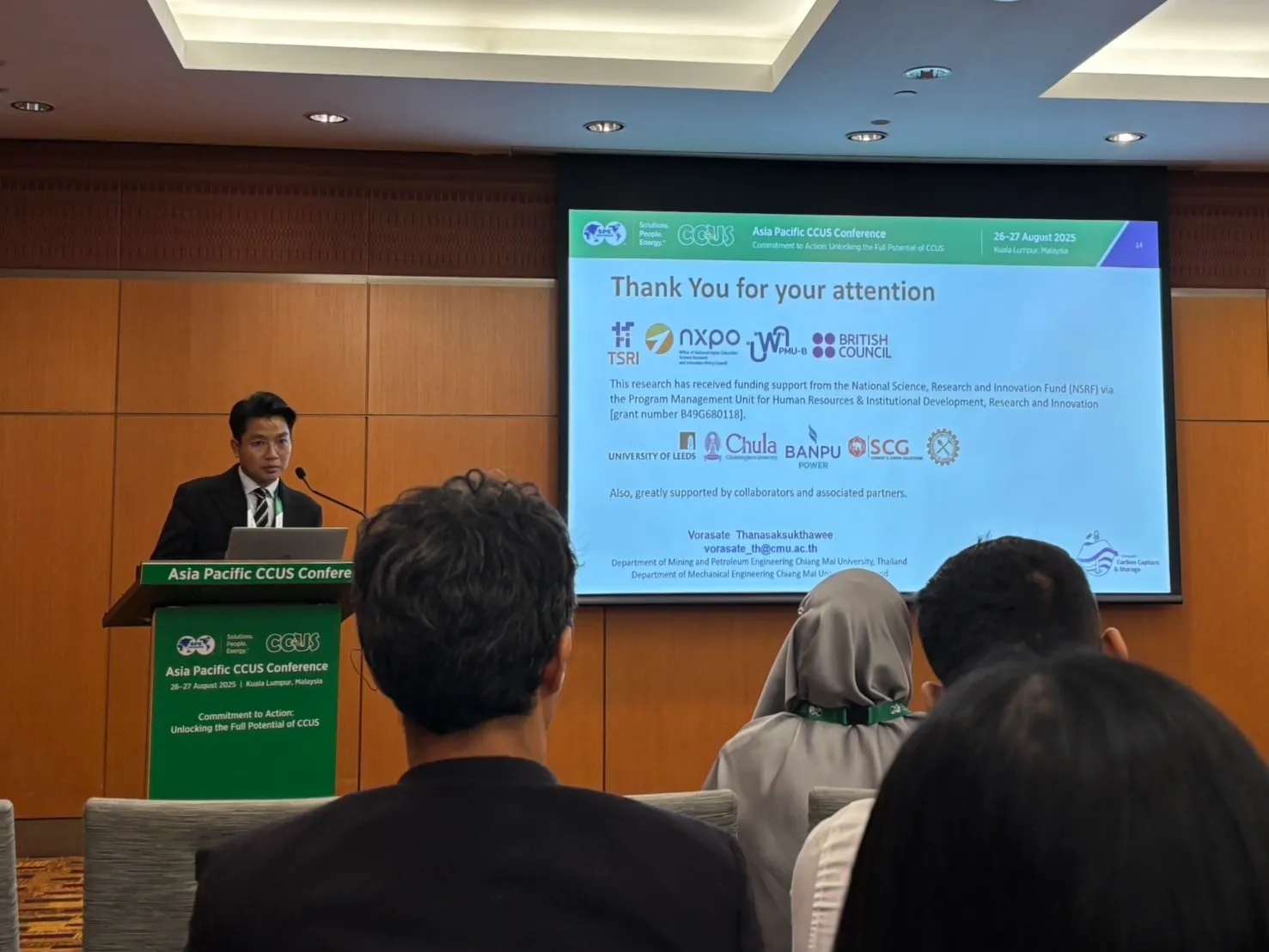
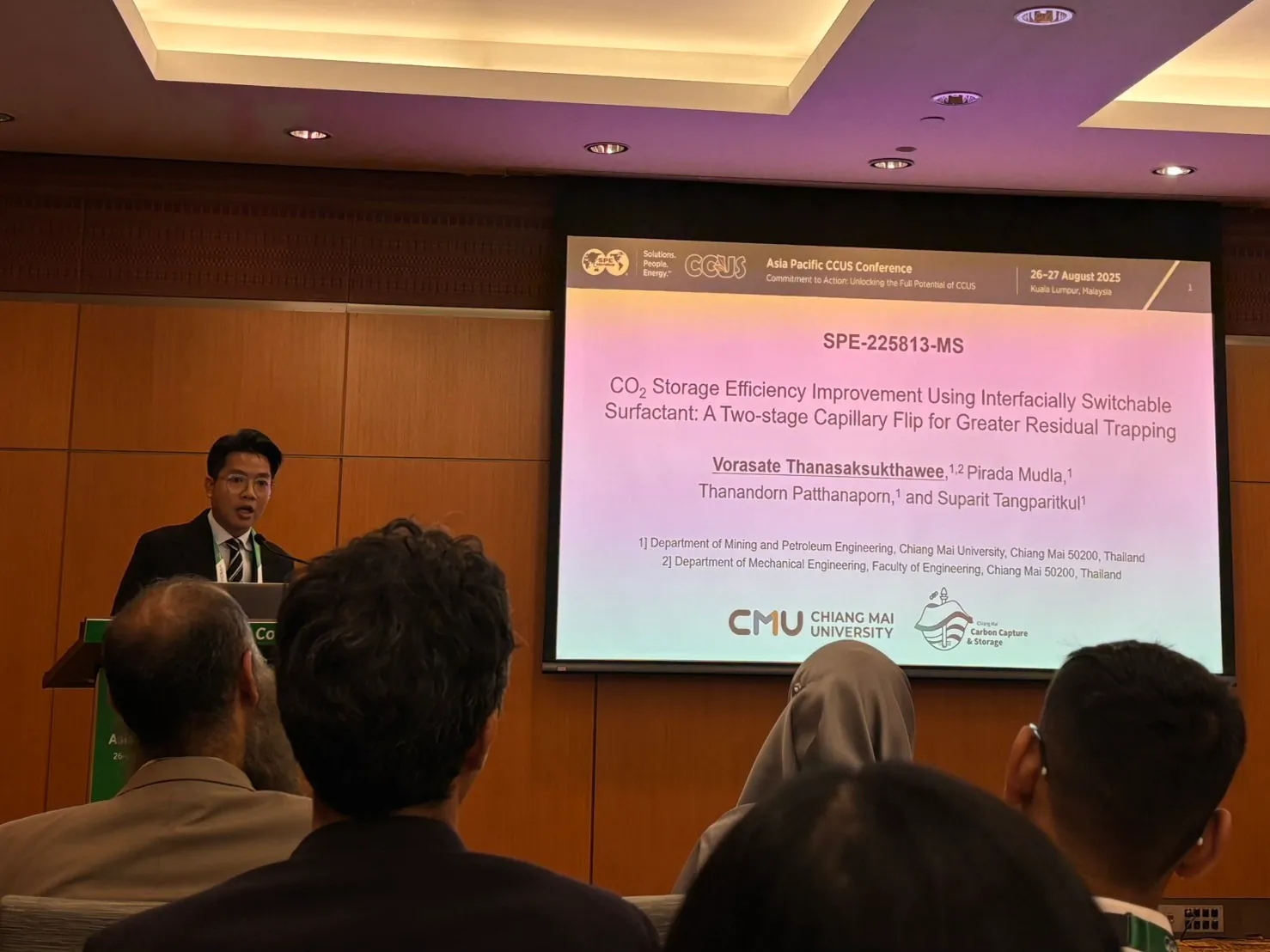
Chiang Mai Carbon Capture and Storage Research Center (Chiang Mai CCS) participated in the SPE Asia Pacific CCUS Conference and Exhibition (APCC 2025) held from 26 to 27 August 2025 in Kuala Lumpur, Malaysia. On this occasion, Mr. Vorasate Thanaksuksuthawee, a Ph.D. student and researcher at Chiang Mai CCS, was selected to deliver an oral presentation on the topic: “CO₂ Storage Efficiency Improvement Using Interfacially Switchable Surfactant: A Two-Stage Capillary Flip for Greater Residual Trapping.” The research was supervised by Associate Professor Dr. Suparit Tangparitkul, who also attended the conference.
This research forms part of a collaborative project between Thailand and the United Kingdom, funded by the Program Management Unit for Human Resources & Institutional Development, Research and Innovation (PMU-B) under the project titled: Clean Hydrogen and CO2 Storages for Energy Transition: From Surface Science Toward Field-Scale Implementation. The full paper is indexed in the OnePetro database under the article number SPE-225813-MS.
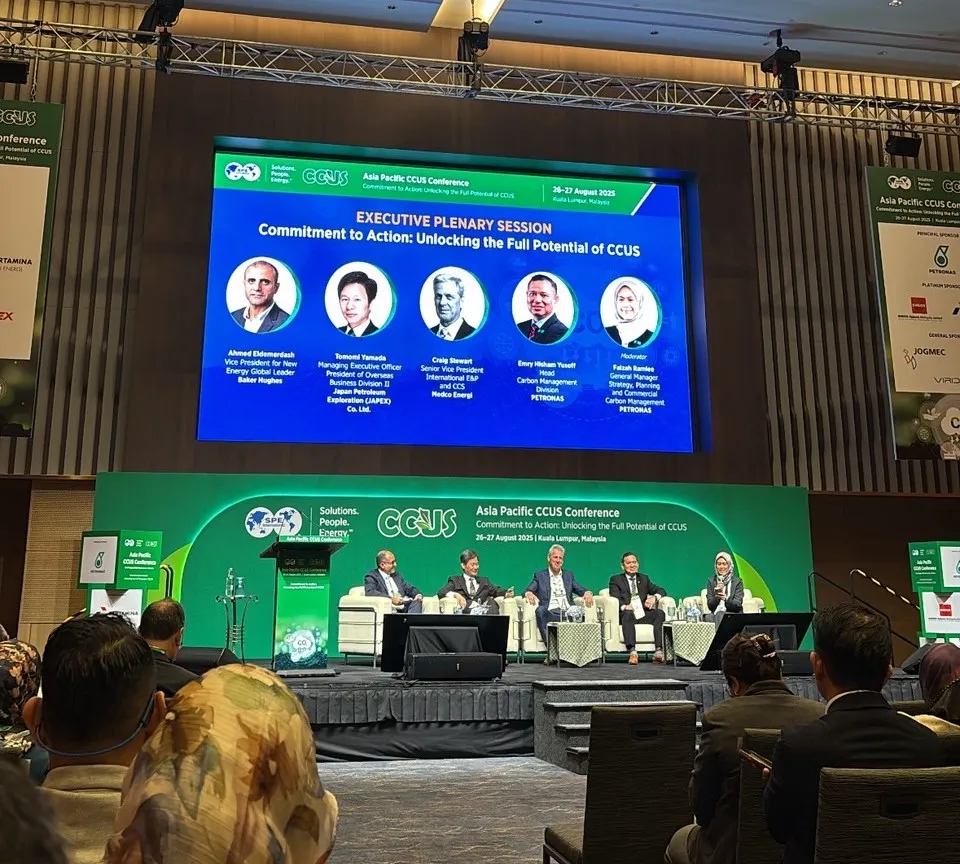
Organized by the Society of Petroleum Engineers (SPE), this conference marked the first regional event in Asia-Pacific focused exclusively on carbon capture, utilization, and storage (CCUS) technologies. The conference brought together academics, researchers, and industry leaders from across the globe to exchange knowledge and showcase advancements in the field.
The presented work introduces a novel concept involving the use of interfacially switchable surfactants to control gas–liquid interfacial tension in subsurface reservoirs. This approach enhances residual trapping mechanisms, with the ultimate goal of reducing the cost per ton of CO₂ injection. The topic received notable interest from participants, including energy companies from Japan working on similar innovations. This international presentation highlights Chiang Mai CCS's proactive role in advancing Thailand’s scientific contributions to the global CCUS landscape and fostering the development of next-generation researchers to support low-carbon energy transitions.
Chiang Mai CCS นำเสนอผลงานวิจัยในการประชุม SPE Asia Pacific CCUS Conference and Exhibition 2025 ณ สหพันธรัฐมาเลเซีย ศูนย์วิจัยการดักจับและกักเก็บคาร์บอนไดออกไซด์เชียงใหม่ (Chiang Mai CCS) เข้าร่วมการประชุม SPE Asia Pacific CCUS Conference and Exhibition (APCC 2025) ซึ่งจัดขึ้นระหว่างวันที่ 26–27 สิงหาคม พ.ศ. 2568 ณ กรุงกัวลาลัมเปอร์ สหพันธรัฐมาเลเซีย โดยในการนี้ นายวรเศรษฐ์ ธนศักดิ์สุขทวี นักศึกษาระดับดุษฎีบัณฑิตและนักวิจัยประจำศูนย์ฯ ได้รับคัดเลือกให้นำเสนอผลงานวิจัยในรูปแบบบรรยาย ภายใต้หัวข้อ “CO₂ Storage Efficiency Improvement Using Interfacially Switchable Surfactant: A Two-Stage Capillary Flip for Greater Residual Trapping” โดยมี รองศาสตราจารย์ ดร.สุพฤทธิ์ ตั้งพฤทธิ์กุล เป็นอาจารย์ที่ปรึกษาวิทยานิพนธ์ และเข้าร่วมการประชุมในครั้งนี้ด้วย
ผลงานดังกล่าวเป็นส่วนหนึ่งของโครงการวิจัยภายใต้ความร่วมมือระหว่างประเทศไทยและสหราชอาณาจักร ซึ่งได้รับทุนสนับสนุนจาก หน่วยบริหารและจัดการทุนด้านการพัฒนากำลังคนและทุนด้านการพัฒนาสถาบันอุดมศึกษา การวิจัย และการสร้างนวัตกรรม (บพค.) ภายใต้โครงการ “ศึกษากลไกทางวิทยาศาสตร์พื้นผิวที่ควบคุมประสิทธิภาพการกักเก็บไฮโดรเจนและคาร์บอนไดออกไซด์ในชั้นหินอุ้มน้ำผ่านหลักการไหลแทนที่ของไหลในชั้นหินอุ้มน้ำและการจำลองแหล่งกักเก็บสู่การนำข้อมูลไปใช้จริงในระดับสนามภายใต้ความร่วมมือไทย-สหราชอาณาจักร” โดยผลงานปรากฏในฐานข้อมูล OnePetro หมายเลขบทความ SPE-225813-MS
ในการประชุมครั้งนี้ จัดโดยสมาคมวิศวกรปิโตรเลียม (Society of Petroleum Engineers – SPE) เป็นครั้งแรกที่มุ่งเน้นเฉพาะด้านเทคโนโลยีดักจับ ใช้ประโยชน์ และกักเก็บคาร์บอน (CCUS) ในระดับภูมิภาคเอเชียแปซิฟิก
โดยมีผู้เข้าร่วมจากหลายประเทศทั่วโลกทั้งภาควิชาการและอุตสาหกรรม ผลงานวิจัยที่นำเสนอเน้นแนวคิดใหม่ในการใช้ interfacially switchable surfactant เพื่อควบคุมแรงตึงผิวของระบบก๊าซ–ของเหลวในชั้นหินแหล่งกักเก็บเพิ่มประสิทธิภาพของการกักเก็บคาร์บอนผ่านกลไกคงค้าง (residual trapping) โดยมีเป้าหมายสำคัญคือการลดต้นทุนต่อหน่วยของการอัดฉีด ซึ่งเป็นประเด็นที่ได้รับความสนใจจากภาคอุตสาหกรรม รวมถึงบริษัทพลังงานจากประเทศญี่ปุ่นที่มีแนวทางวิจัยในทิศทางเดียวกัน การเข้าร่วมประชุมในครั้งนี้แสดงให้เห็นถึงบทบาทเชิงรุกของศูนย์วิจัย Chiang Mai CCS ในการนำองค์ความรู้ด้าน CCUS ของประเทศไทยสู่เวทีนานาชาติ และเสริมสร้างศักยภาพของนักวิจัยรุ่นใหม่ในการขับเคลื่อนเป้าหมายด้านพลังงานคาร์บอนต่ำอย่างเป็นรูปธรรม.