Chiang Mai CCS Contributes CCUS Expertise at IEEE Thailand Section Seminar on Future Energy Technologies
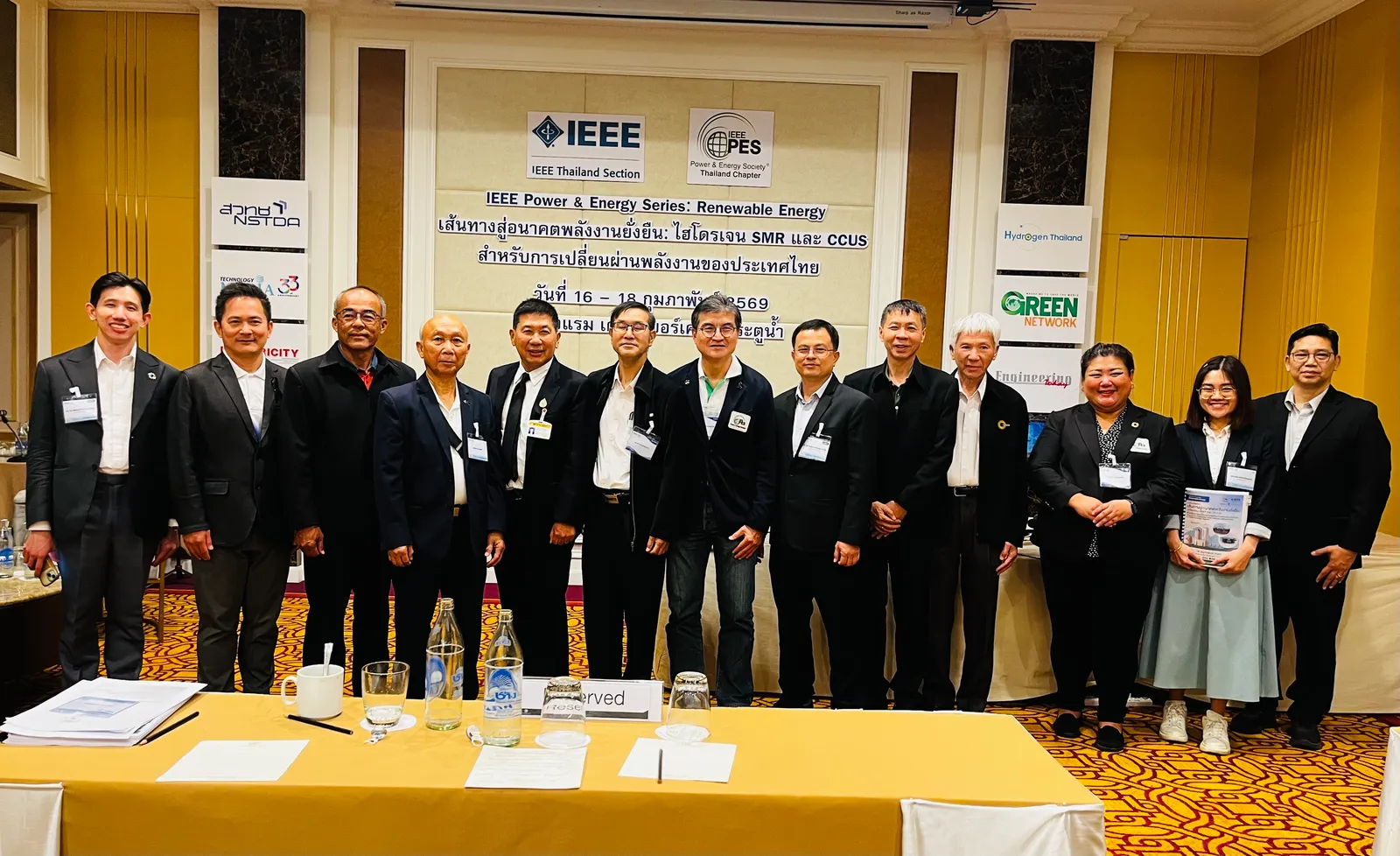
Researchers from the Chiang Mai Research Center for Carbon Capture and Storage (Chiang Mai CCS), Chiang Mai University, participated as invited speakers in the academic seminar entitled “Pathways to a Sustainable Energy Future: Hydrogen SMR and CCUS for Thailand’s Energy Transition.” The seminar was held from 16–18 February 2026 at The Berkeley Hotel Pratunam, Bangkok, and was organized by the IEEE Thailand Section (Power & Energy Society) in collaboration with the National Science and Technology Development Agency (NSTDA) and the Hydrogen Thailand Association. The event was supported academically by the Energy Policy and Planning Office (EPPO), the Electricity Generating Authority of Thailand (EGAT), the Thailand Greenhouse Gas Management Organization (TGO), the Office of Atoms for Peace, as well as representatives from industry and higher education institutions.
The seminar aimed to strengthen technical understanding of emerging energy technologies, including hydrogen production via Steam Methane Reforming (SMR), Small Modular Reactors (SMRs), and Carbon Capture, Utilization and Storage (CCUS). It also explored pathways for integrating these technologies into Thailand’s energy system to support greenhouse gas mitigation and facilitate the country’s long-term transition toward a low-carbon energy future.
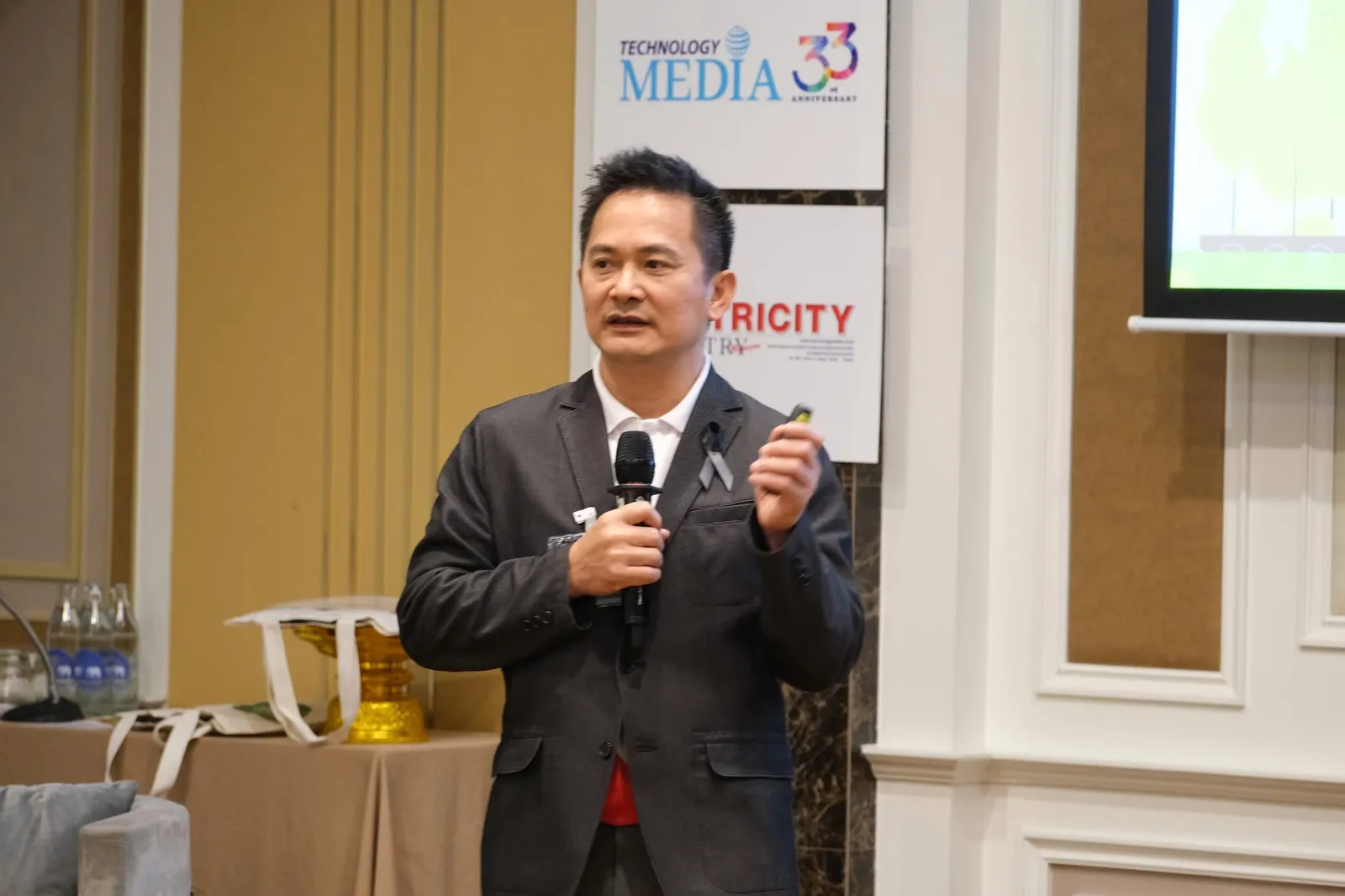
In the CCUS technical session, Professor Dr. Nakorn Tippayawong, a researcher affiliated with Chiang Mai CCS, delivered a lecture entitled “CCUS Fundamentals and the Thai Context: Capture Technologies for Power and Industrial Plants.” His presentation outlined the fundamental principles of carbon capture technologies from major emission sources in both the power generation and industrial sectors. The talk also discussed current technological trends and their potential applicability within Thailand’s industrial and energy contexts.
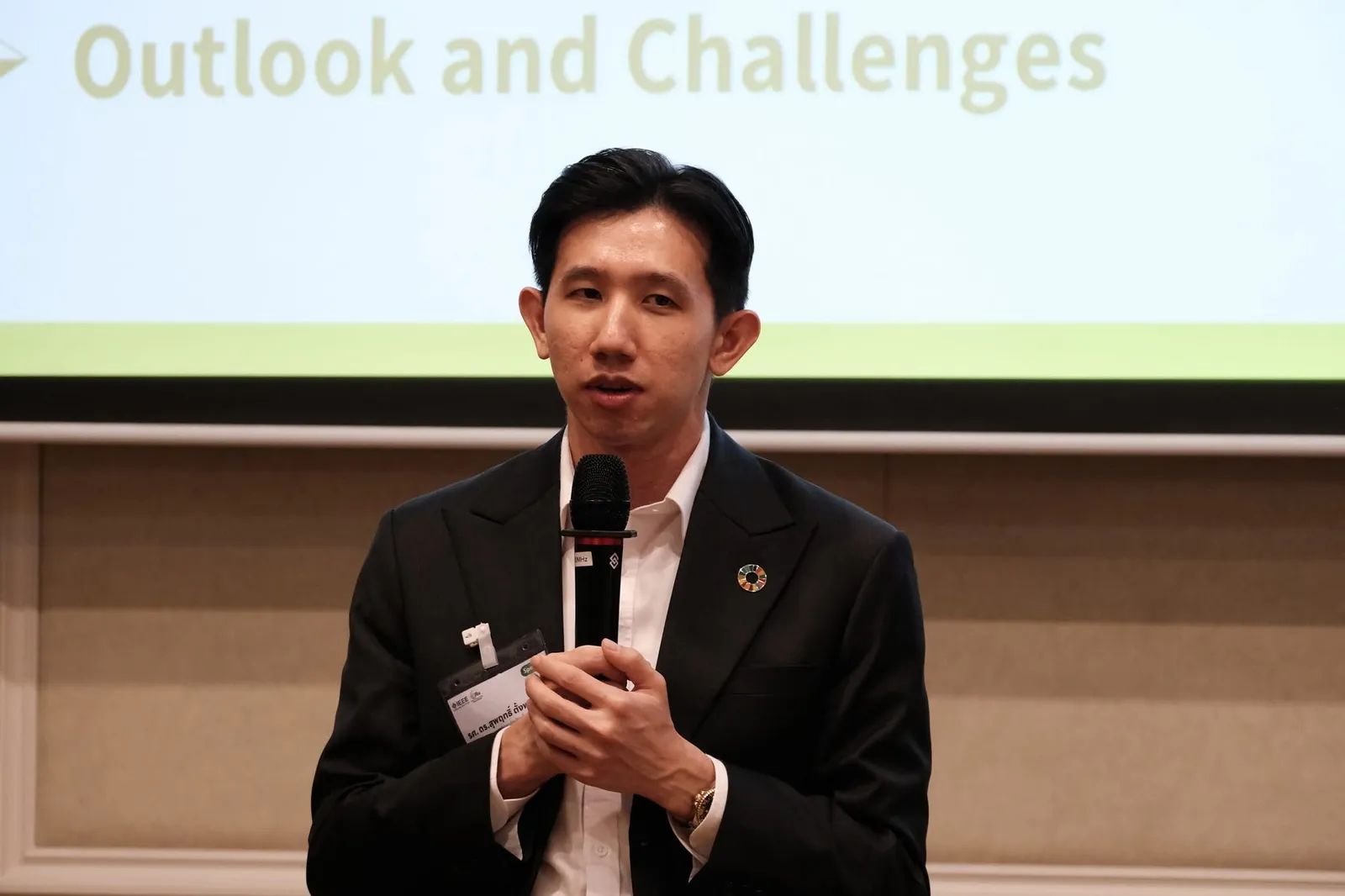
Following this, Associate Professor Dr. Suparit Tangparitkul, Director of Chiang Mai CCS, presented “CCUS Fundamentals and the Thai Context: Geological Storage Potential in the Gulf of Thailand.” The lecture addressed the fundamental concepts of geological carbon storage and examined the storage potential of subsurface formations in the Gulf of Thailand, which are considered promising candidates for future large-scale CO₂ storage projects. The presentation also covered key aspects of storage capacity evaluation, project design considerations, and technical challenges associated with implementing industrial-scale carbon storage initiatives.
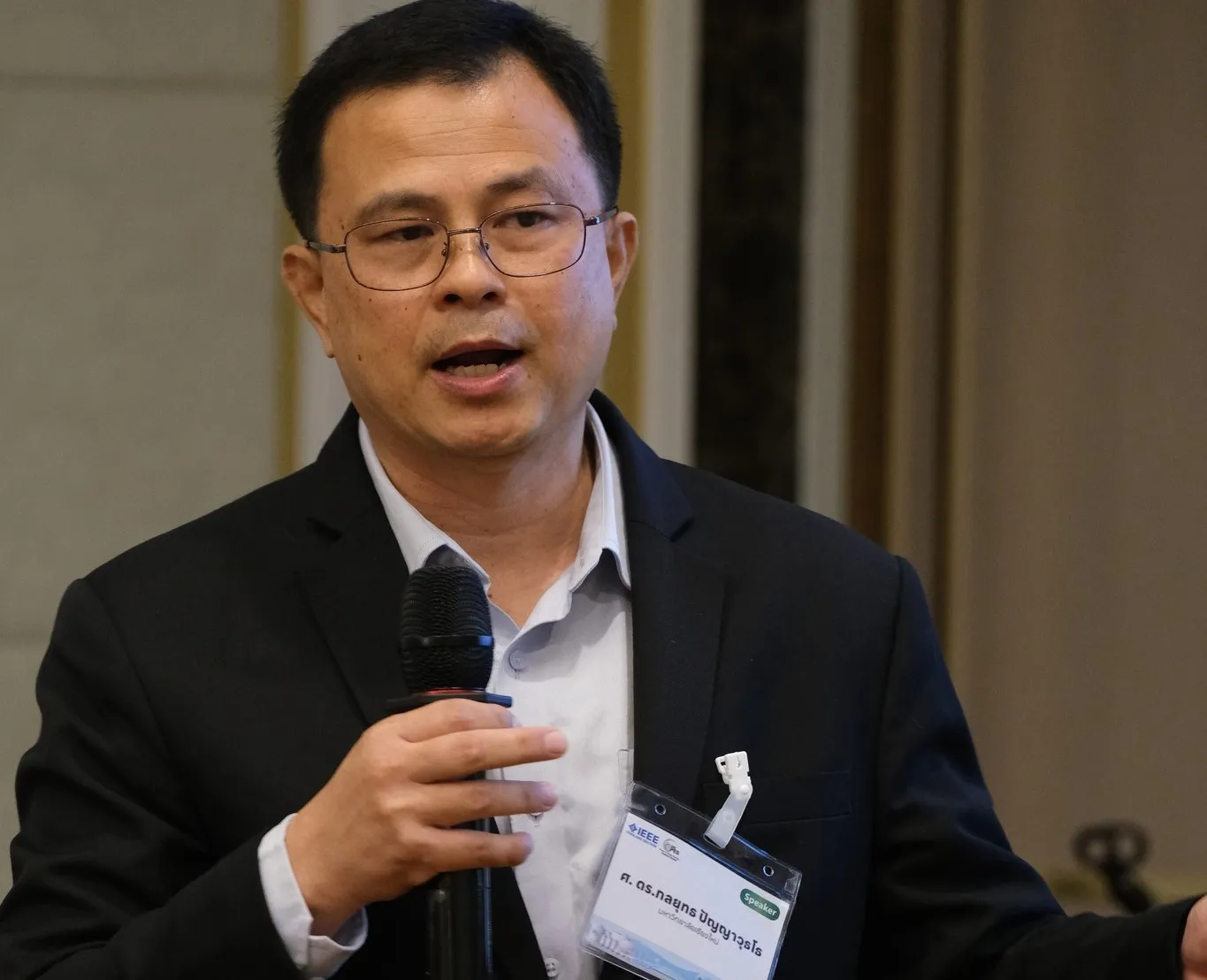
In addition, Associate Professor Dr. Konlayutt Punyawudho, from the Department of Mechanical Engineering, Faculty of Engineering, Chiang Mai University, presented “Hydrogen Utilization: Advances in Fuel Cell Technology and Materials and Integrating Hydrogen into the Power System.” His lecture highlighted recent developments in fuel cell technologies, advances in hydrogen-related materials, and strategies for integrating hydrogen systems into modern power infrastructures.
The seminar provided a platform for in-depth discussions among experts, academics, policymakers, and representatives from the energy sector. Participants included officials from government agencies and members of the Senate Energy Committee, who joined the discussions to exchange perspectives on the role of hydrogen and CCUS technologies in shaping Thailand’s future energy policy.
The participation of Chiang Mai University researchers in this forum underscores the important role of academic institutions in advancing knowledge on emerging clean energy technologies. In particular, it highlights the contributions of Chiang Mai CCS in developing research and expertise in carbon capture and storage and hydrogen energy systems, supporting Thailand’s transition toward a sustainable Net Zero future.
Chiang Mai CCS ร่วมบรรยาย CCUS ในการสัมมนาเทคโนโลยีพลังงานแห่งอนาคตของ IEEE Thailand Section
คณาจารย์นักวิจัยจากศูนย์วิจัยการดักจับและกักเก็บคาร์บอนไดออกไซด์เชียงใหม่ (Chiang Mai CCS) มหาวิทยาลัยเชียงใหม่ ร่วมบรรยายในการสัมมนาวิชาการด้านเทคโนโลยีพลังงานแห่งอนาคต เรื่อง “เส้นทางสู่อนาคตพลังงานยั่งยืน: ไฮโดรเจน SMR และ CCUS สำหรับการเปลี่ยนผ่านพลังงานของประเทศ” ซึ่งจัดขึ้นระหว่างวันที่ 16–18 กุมภาพันธ์ 2569 ณ โรงแรมเดอะ เบอร์เคลีย์ ประตูน้ำ กรุงเทพมหานคร โดยสมาคมไฟฟ้าและพลังงานไอทริปเปิลอี (ประเทศไทย) (IEEE Thailand Section) ร่วมกับสำนักงานพัฒนาวิทยาศาสตร์และเทคโนโลยีแห่งชาติ (สวทช.) และชมรมไฮโดรเจนประเทศไทย ภายใต้การสนับสนุนทางวิชาการจากสำนักงานนโยบายและแผนพลังงาน (สนพ.) การไฟฟ้าฝ่ายผลิตแห่งประเทศไทย (กฟผ.) องค์การบริหารจัดการก๊าซเรือนกระจก (อบก.) สำนักงานปรมาณูเพื่อสันติ ตลอดจนภาคอุตสาหกรรมและสถาบันอุดมศึกษา
การสัมมนาดังกล่าวมีวัตถุประสงค์เพื่อเสริมสร้างความรู้ความเข้าใจเกี่ยวกับเทคโนโลยีไฮโดรเจน เทคโนโลยีเตาปฏิกรณ์นิวเคลียร์ขนาดเล็กแบบโมดูลาร์ (Small Modular Reactors: SMRs) และเทคโนโลยีการดักจับ ใช้ประโยชน์ และกักเก็บคาร์บอน (Carbon Capture, Utilization and Storage: CCUS) พร้อมนำเสนอแนวทางการบูรณาการเทคโนโลยีเหล่านี้เข้ากับระบบพลังงานของประเทศไทย เพื่อสนับสนุนการลดการปล่อยก๊าซเรือนกระจกและการเปลี่ยนผ่านสู่ระบบพลังงานคาร์บอนต่ำในระยะยาว
ในหัวข้อด้าน CCUS ศาสตราจารย์ (เชี่ยวชาญพิเศษ) ดร.นคร ทิพยาวงศ์ อาจารย์นักวิจัยของศูนย์วิจัย Chiang Mai CCS ได้นำเสนอหัวข้อ “CCUS Fundamentals and the Thai Context: Capture Technologies for Power and Industrial Plants” โดยกล่าวถึงหลักการพื้นฐานของเทคโนโลยีการดักจับคาร์บอนจากแหล่งปล่อยก๊าซ ทั้งในภาคการผลิตไฟฟ้าและภาคอุตสาหกรรม พร้อมทั้งอภิปรายแนวโน้มของเทคโนโลยีการดักจับคาร์บอนที่มีศักยภาพต่อการประยุกต์ใช้ในบริบทของประเทศไทย
ต่อมา รองศาสตราจารย์ ดร.สุพฤทธิ์ ตั้งพฤทธิ์กุล หัวหน้าศูนย์วิจัย Chiang Mai CCS บรรยายในหัวข้อ “CCUS Fundamentals and the Thai Context: Geological Storage Potential in the Gulf of Thailand” โดยนำเสนอหลักการของการกักเก็บคาร์บอนไดออกไซด์เชิงธรณีวิทยา พร้อมวิเคราะห์ศักยภาพของแหล่งกักเก็บคาร์บอนในบริเวณอ่าวไทย ซึ่งถือเป็นพื้นที่สำคัญที่มีศักยภาพรองรับโครงการกักเก็บคาร์บอนไดออกไซด์ในอนาคต การบรรยายยังครอบคลุมประเด็นด้านการประเมินความสามารถในการกักเก็บ การออกแบบโครงการกักเก็บ และความท้าทายด้านเทคนิคสำหรับการพัฒนาโครงการในระดับอุตสาหกรรม
นอกจากนี้ รองศาสตราจารย์ ดร.กลยุทธ ปัญญาวุธโธ ภาควิชาวิศวกรรมเครื่องกล คณะวิศวกรรมศาสตร์ มหาวิทยาลัยเชียงใหม่ ได้นำเสนอหัวข้อ “Hydrogen Utilization: Advances in Fuel Cell Technology and Materials and Integrating Hydrogen into the Power System” โดยกล่าวถึงความก้าวหน้าของเทคโนโลยีเซลล์เชื้อเพลิง การพัฒนาวัสดุสำหรับระบบไฮโดรเจน และแนวทางการบูรณาการไฮโดรเจนเข้ากับระบบพลังงานไฟฟ้า
การสัมมนาครั้งนี้ยังเปิดโอกาสให้เกิดการแลกเปลี่ยนความคิดเห็นระหว่างผู้เชี่ยวชาญ นักวิชาการ ผู้กำหนดนโยบาย และผู้แทนจากภาคอุตสาหกรรมด้านพลังงาน โดยมีผู้แทนจากหน่วยงานภาครัฐและสมาชิกวุฒิสภาบางส่วนเข้าร่วมรับฟังและแลกเปลี่ยนมุมมองเกี่ยวกับบทบาทของเทคโนโลยี CCUS และไฮโดรเจนต่อการกำหนดทิศทางนโยบายพลังงานของประเทศไทยในอนาคต
การมีส่วนร่วมของคณาจารย์และนักวิจัยจากมหาวิทยาลัยเชียงใหม่ในเวทีดังกล่าวสะท้อนบทบาทของสถาบันอุดมศึกษาในการสนับสนุนองค์ความรู้ด้านเทคโนโลยีพลังงานสะอาด โดยเฉพาะการพัฒนาองค์ความรู้ด้าน CCUS และระบบพลังงานไฮโดรเจน เพื่อสนับสนุนการเปลี่ยนผ่านด้านพลังงานของประเทศสู่เป้าหมาย Net Zero อย่างยั่งยืน.