Chiang Mai CCS Delivers Invited Lecture at the International Academic Seminar “Thailand–Korea CCUS Joint Research Collaboration”
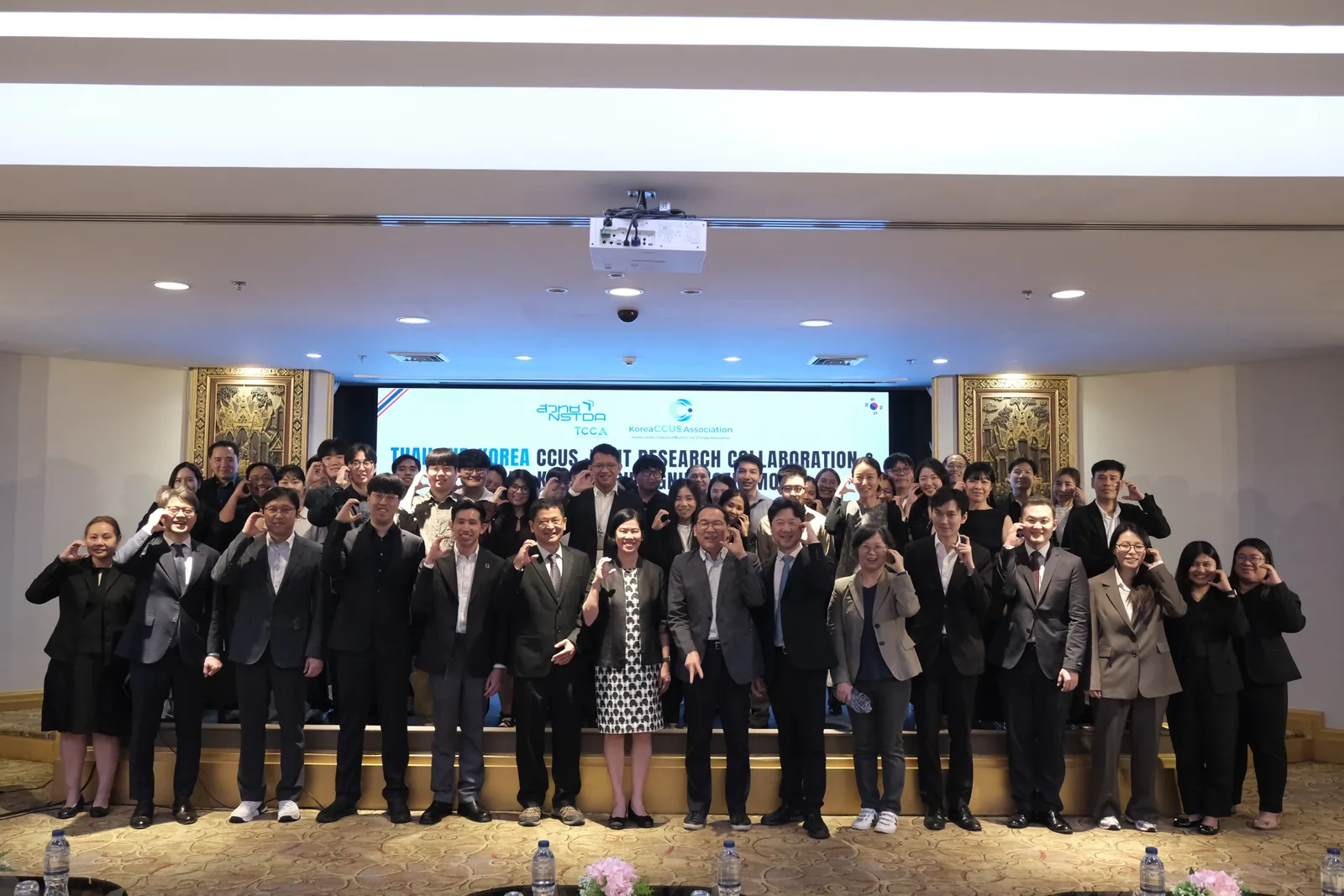
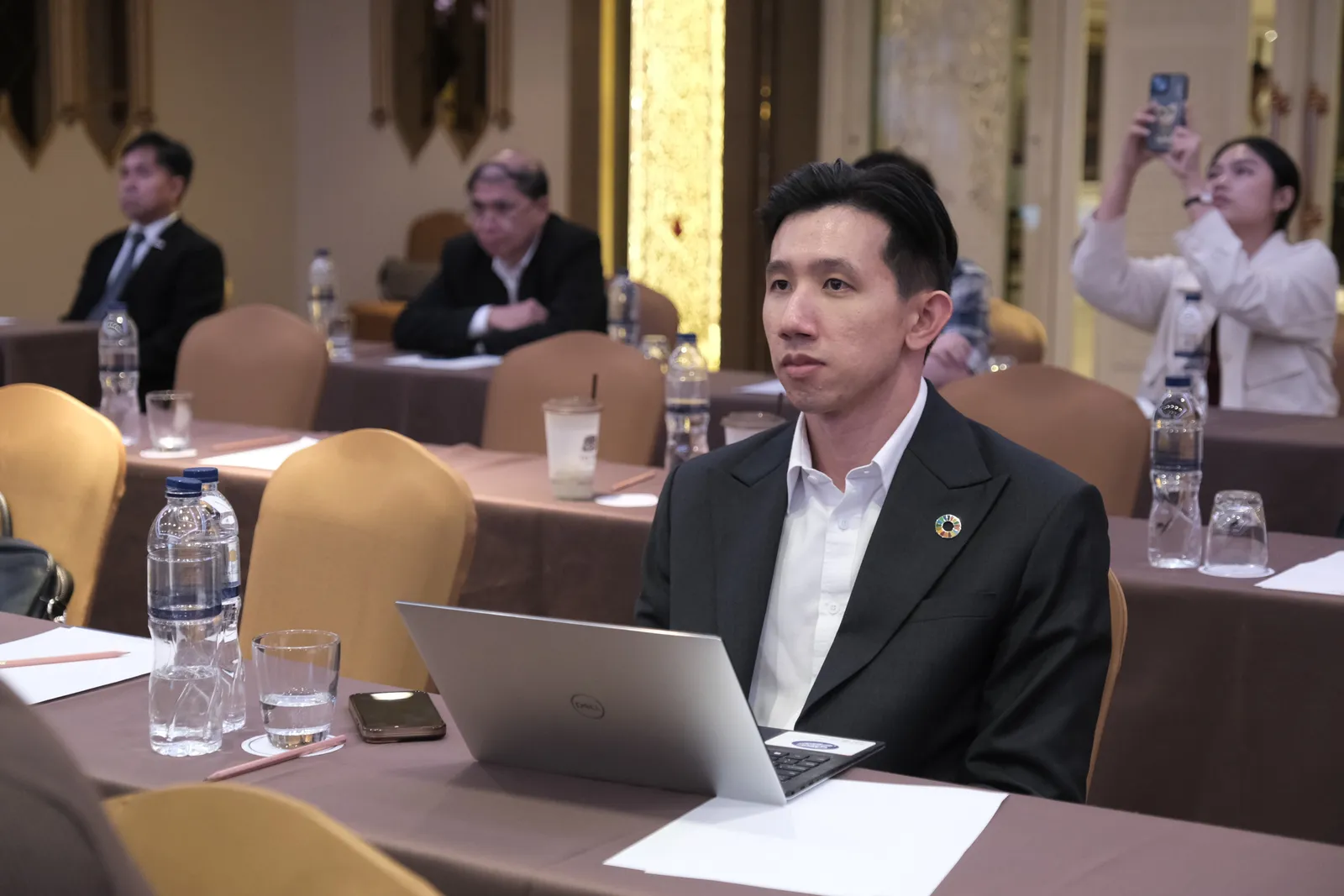
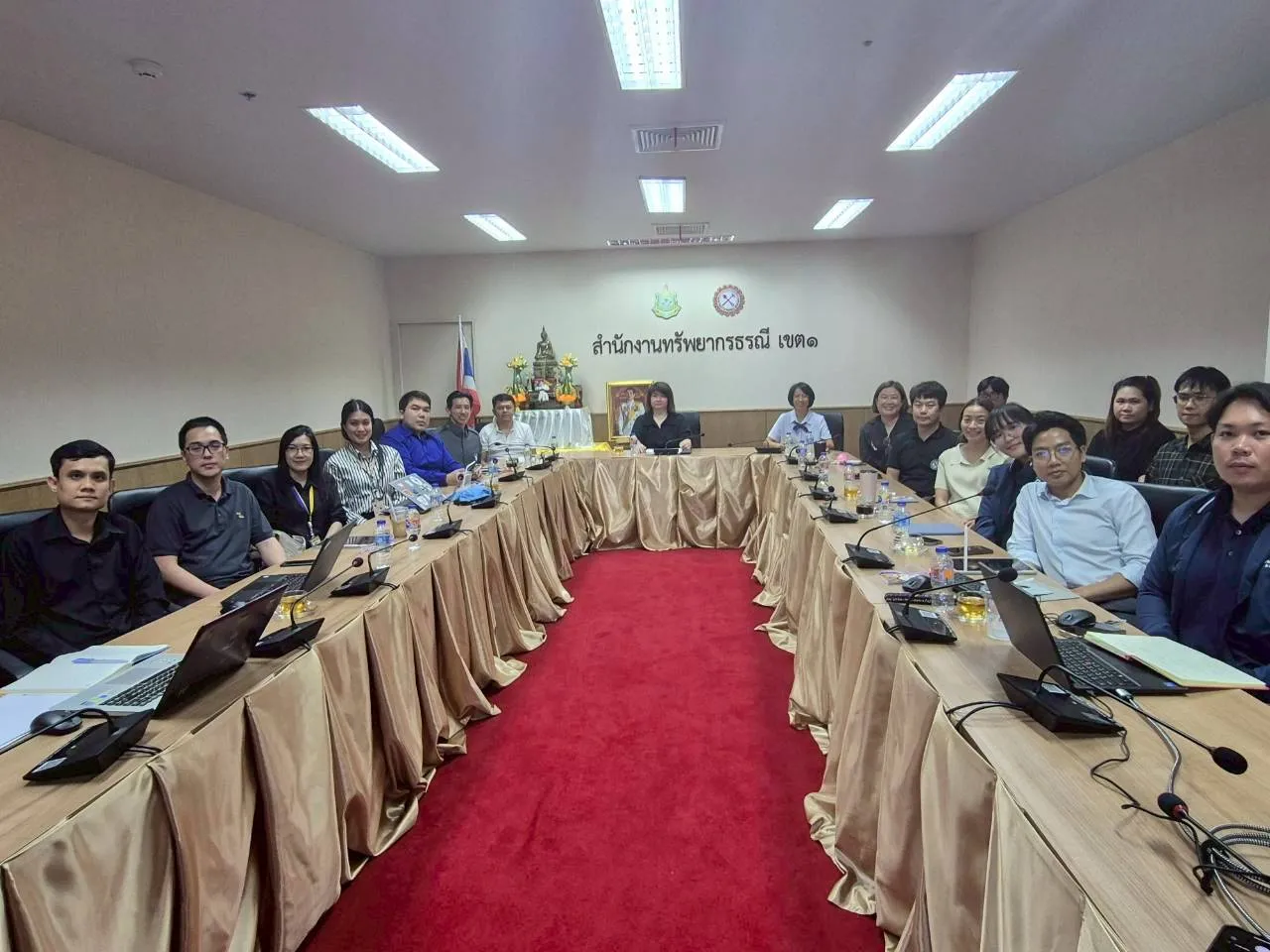
On 9 February 2026, the international academic seminar “Thailand–Korea CCUS Joint Research Collaboration” was held at the Mandarin Hotel, Bangkok. The event was organized through the collaboration of Inha University, Republic of Korea, and Chulalongkorn University, together with the National Science and Technology Development Agency (NSTDA) under the Thailand CCUS Alliance (TCCA) initiative and the Korea CCUS Association (KCCUS). The seminar aimed to advance bilateral cooperation in Carbon Capture, Utilization and Storage (CCUS) across multiple dimensions, including engineering, geology, energy economics, and regulatory and policy frameworks.
The meeting serves as an annual academic platform for researchers, policymakers, and industry stakeholders to exchange knowledge on geological carbon storage, CCUS project design at the field scale, and enabling mechanisms supporting the transition toward Net Zero. Over the past two years, the seminar has been hosted at Chiang Mai University, reflecting its growing role in advancing research on reservoir engineering and subsurface gas storage relevant to the Southeast Asian context.
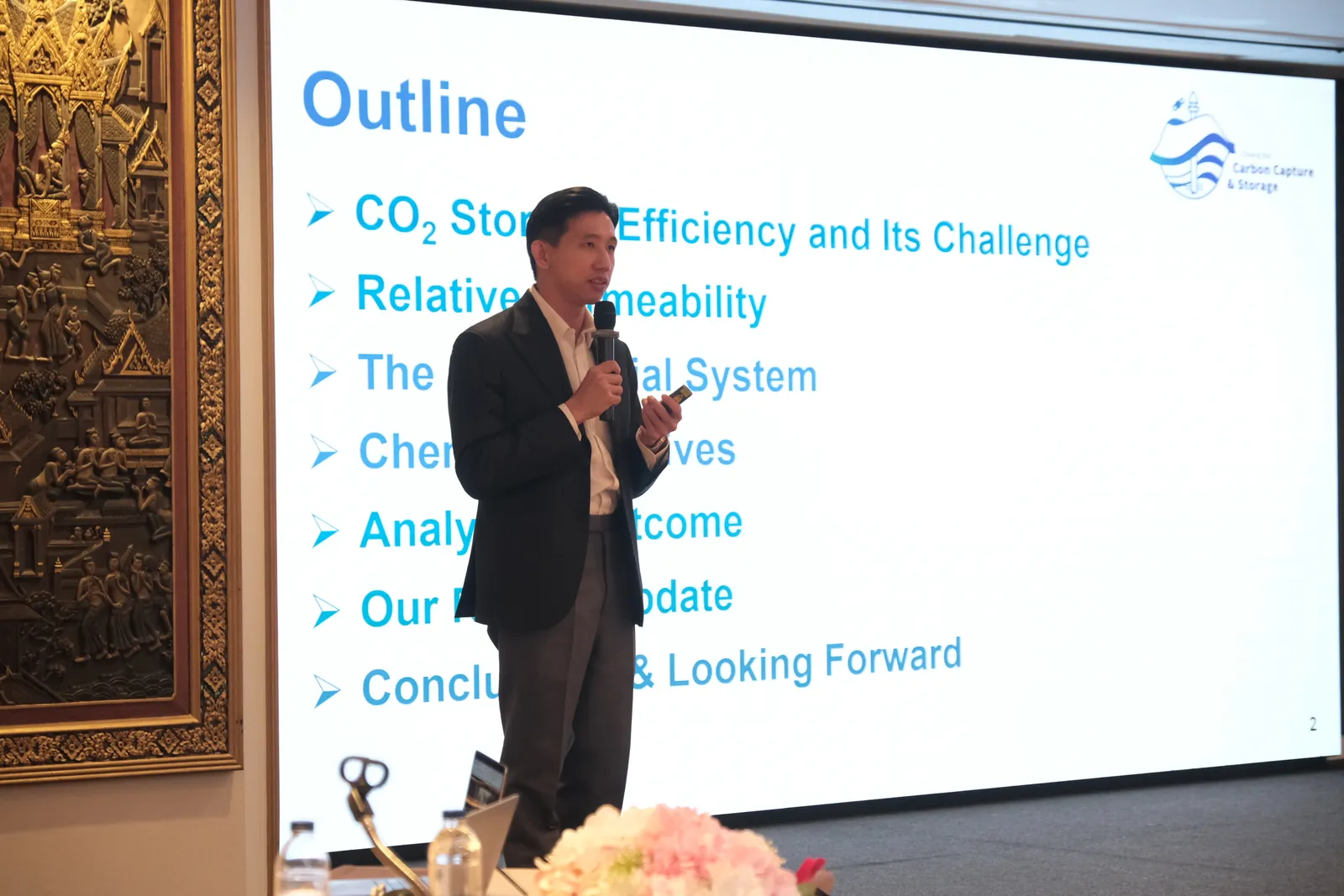
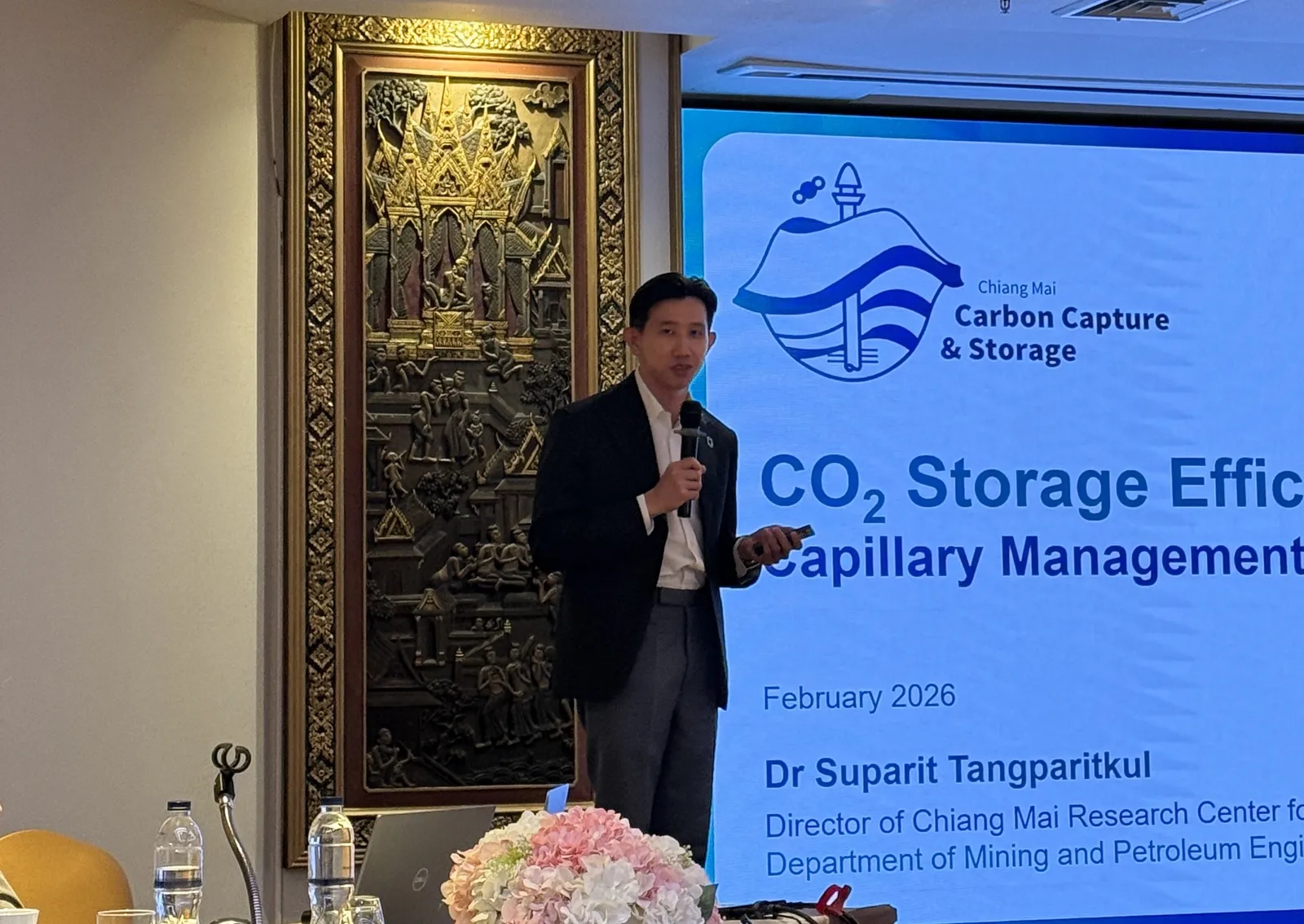
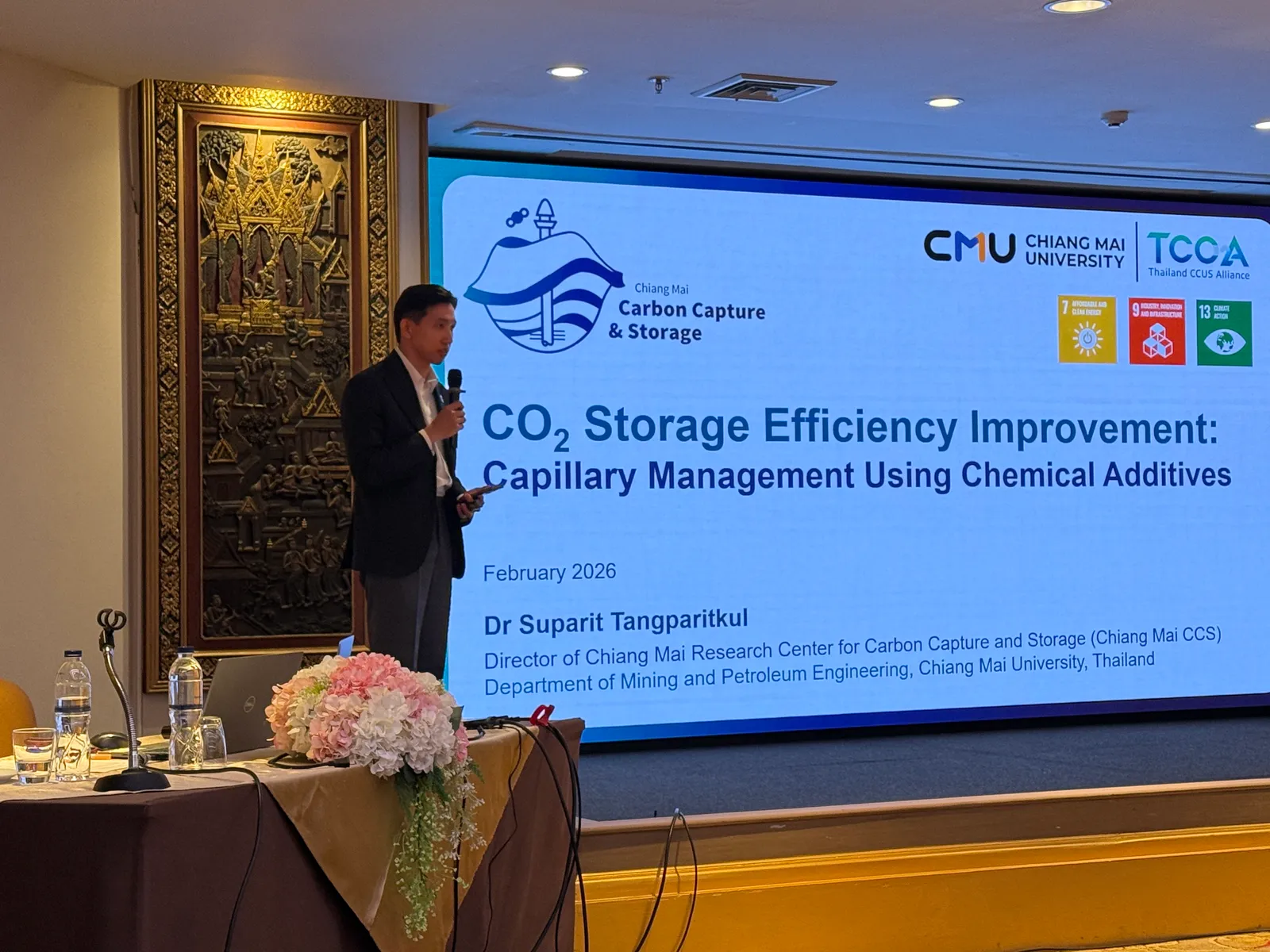
On this occasion, Associate Professor Dr. Suparit Tangparitkul, Director of the Chiang Mai Research Center for Carbon Capture and Storage (Chiang Mai CCS), was invited to deliver a special lecture on storage efficiency improvement in geological CO₂ storage systems. His presentation focused on key aspects of subsurface engineering, including petrophysical characterization of reservoir rocks, storage capacity assessment, and the design of injection strategies under pressure and geomechanical constraints. The lecture also highlighted the application of multiphase flow simulation combined with uncertainty analysis to enhance predictive accuracy for CO₂ plume migration and to reduce operational risks in industrial-scale CCUS projects.
The seminar also featured presentations from leading experts from the Republic of Korea. Prof. Dr. Sukjoon Pyun of Inha University presented the research collaboration framework and strategic direction for CCUS technology development in Korea. Dr. Tae Eui Lee of the Korea Energy Economics Institute (KEEI) discussed the role of CCUS within national energy policy and carbon economics under the Net Zero 2050 target. In the technical domain of subsurface evaluation, Prof. Kyungbook Lee from Kongju National University presented methodologies for geological structure analysis and storage integrity assessment to support long-term carbon storage.
In the area of advanced technologies, Prof. Honggeun Jo from Inha University introduced the application of artificial intelligence to improve rock property evaluation and reduce uncertainties in reservoir modeling. Dr. Dahee Choo from KEEI presented the Measurement, Reporting and Verification (MRV) framework designed to ensure transparency and credibility in CCUS project implementation. Meanwhile, Prof. Hyondon Shin of Inha University presented technologies for real-time monitoring of CO₂ migration in subsurface formations, aimed at enhancing operational safety and risk management.
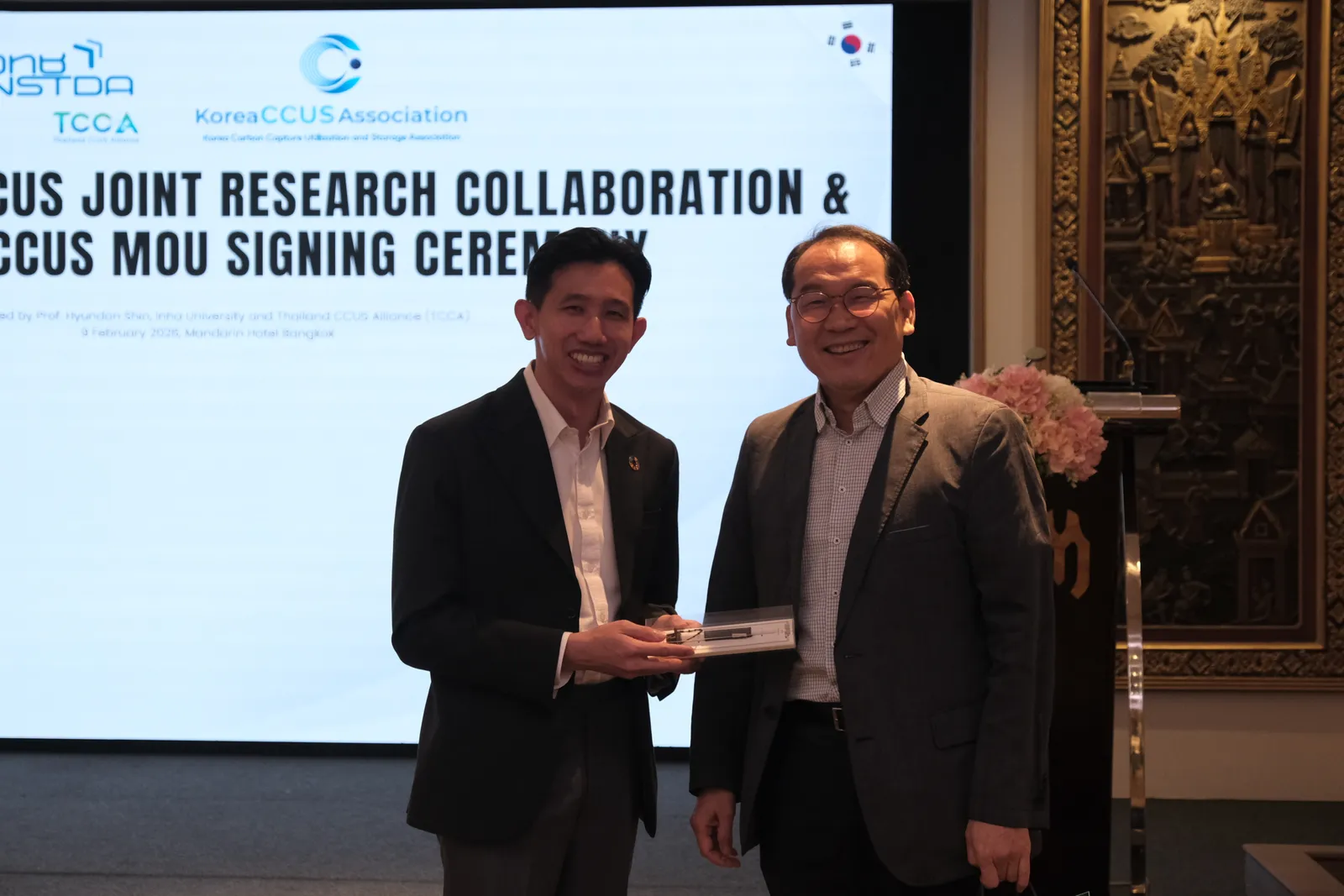
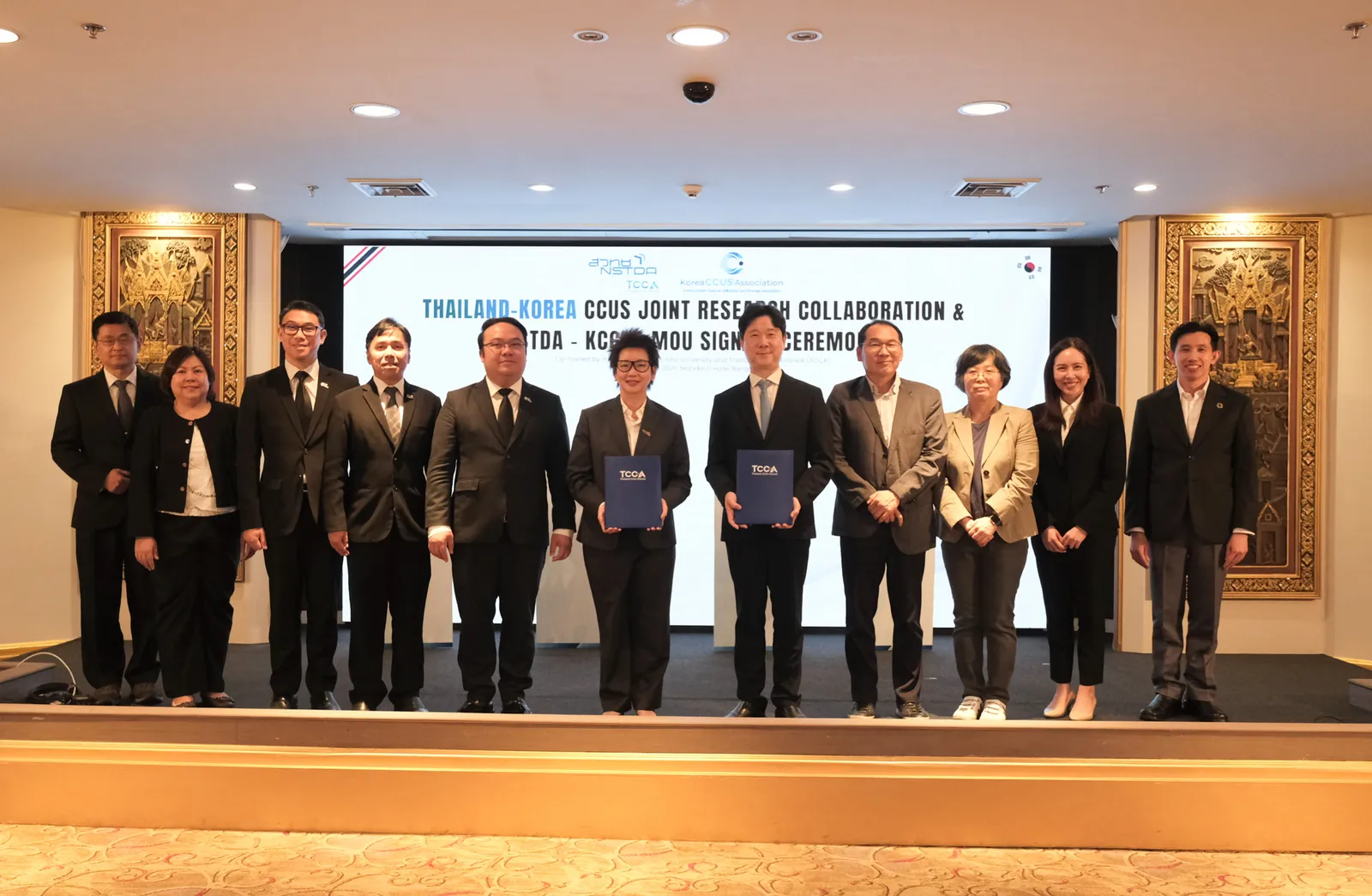
At the conclusion of the seminar, a Memorandum of Understanding (MOU) was signed between NSTDA, on behalf of the Thailand CCUS Alliance (TCCA), and the Korea CCUS Association (KCCUS). The agreement seeks to strengthen institutional collaboration in research, technology development, and knowledge exchange in the long term, reflecting the integration of academic, policy, and industrial cooperation between Thailand and the Republic of Korea to accelerate the practical deployment of CCUS technologies.
Chiang Mai CCS บรรยายพิเศษในงานสัมมนาวิชาการนานาชาติ Thailand–Korea CCUS Joint Research Collaboration
เมื่อวันที่ 9 กุมภาพันธ์ 2569 ได้มีการจัดการสัมมนาวิชาการระดับนานาชาติ “Thailand–Korea CCUS Joint Research Collaboration” ณ โรงแรมแมนดาริน กรุงเทพฯ โดยความร่วมมือระหว่าง Inha University สาธารณรัฐเกาหลี และจุฬาลงกรณ์มหาวิทยาลัย ร่วมกับสำนักงานพัฒนาวิทยาศาสตร์และเทคโนโลยีแห่งชาติ (สวทช.) ในนามโครงการ Thailand CCUS Alliance (TCCA) และ Korea CCUS Association (KCCUS) เพื่อพัฒนาและยกระดับความร่วมมือด้าน Carbon Capture, Utilization and Storage (CCUS) ในมิติวิศวกรรม ธรณีวิทยา เศรษฐศาสตร์พลังงาน และกรอบกำกับดูแลเชิงนโยบาย
การประชุมดังกล่าวเป็นเวทีวิชาการที่จัดขึ้นเป็นประจำทุกปี เพื่อแลกเปลี่ยนองค์ความรู้ด้านการกักเก็บคาร์บอนเชิงธรณีวิทยา การออกแบบโครงการ CCUS ในระดับภาคสนาม และกลไกสนับสนุนการดำเนินงานสู่เป้าหมาย Net Zero โดยในช่วงสองปีที่ผ่านมา การจัดประชุมได้จัดขึ้น ณ มหาวิทยาลัยเชียงใหม่ ซึ่งมีบทบาทสำคัญในการพัฒนาองค์ความรู้ด้านวิศวกรรมแหล่งกักเก็บและการกักเก็บก๊าซใต้พิภพสำหรับบริบทของภูมิภาคเอเชียตะวันออกเฉียงใต้
ในการนี้ รองศาสตราจารย์ ดร.สุพฤทธิ์ ตั้งพฤทธิ์กุล หัวหน้าศูนย์วิจัยการดักจับและกักเก็บคาร์บอนไดออกไซด์เชียงใหม่ (Chiang Mai CCS) ได้รับเชิญให้บรรยายพิเศษในประเด็นการเพิ่มประสิทธิภาพการกักเก็บคาร์บอนไดออกไซด์ในชั้นหินกักเก็บ (storage efficiency improvement) โดยมุ่งเน้นการวิเคราะห์คุณลักษณะทางปิโตรฟิสิกส์ของหิน (petrophysical characterization) การประเมินความสามารถในการกักเก็บ (storage capacity assessment) และการออกแบบกลยุทธ์การอัดฉีดภายใต้ข้อจำกัดด้านความดันและเสถียรภาพเชิงกลศาสตร์ของชั้นหิน นอกจากนี้ยังได้นำเสนอการประยุกต์ใช้แบบจำลองการไหลหลายเฟส (multiphase flow simulation) ร่วมกับการวิเคราะห์ความไม่แน่นอน (uncertainty analysis) เพื่อเพิ่มความแม่นยำในการคาดการณ์พฤติกรรมการกระจายตัวของคาร์บอนไดออกไซด์ และลดความเสี่ยงในการดำเนินโครงการในระดับอุตสาหกรรม
ในส่วนของผู้บรรยายจากสาธารณรัฐเกาหลี Prof. Dr. Sukjoon Pyun จาก Inha University ได้นำเสนอกรอบความร่วมมือด้านการวิจัยและทิศทางการพัฒนาเทคโนโลยี CCUS ของประเทศเกาหลีใต้ ขณะที่ Dr. Tae Eui Lee จาก Korea Energy Economics Institute (KEEI) ได้นำเสนอการวิเคราะห์บทบาทของ CCUS ในโครงสร้างนโยบายพลังงานและเศรษฐศาสตร์คาร์บอน ภายใต้เป้าหมาย Net Zero 2050 ด้านเทคนิคการประเมินศักยภาพแหล่งกักเก็บ Prof. Kyungbook Lee จาก Kongju National University ได้นำเสนอวิธีการวิเคราะห์โครงสร้างทางธรณีวิทยาและการประเมินบูรณภาพของแหล่งกักเก็บ (storage integrity) เพื่อรองรับการกักเก็บในระยะยาว
ในมิติเทคโนโลยีขั้นสูง Prof. Honggeun Jo จาก Inha University ได้นำเสนอการประยุกต์ใช้ปัญญาประดิษฐ์เพื่อปรับปรุงการประเมินคุณสมบัติของหินและลดความไม่แน่นอนของแบบจำลอง ขณะที่ Dr. Dahee Choo จาก KEEI ได้นำเสนอกรอบ Measurement, Reporting and Verification (MRV) เพื่อสนับสนุนความโปร่งใสและความน่าเชื่อถือของโครงการ CCUS และ Prof. Hyondon Shin จาก Inha University ได้นำเสนอเทคโนโลยีการติดตามการเคลื่อนที่ของคาร์บอนไดออกไซด์ในชั้นหินแบบเรียลไทม์ เพื่อยกระดับความปลอดภัยและการบริหารจัดการความเสี่ยงเชิงปฏิบัติการ
ในช่วงท้ายของการสัมมนา ได้มีพิธีลงนามบันทึกความเข้าใจ (MOU) ระหว่าง สวทช. ในนามโครงการ TCCA และ Korea CCUS Association (KCCUS) เพื่อเสริมสร้างความร่วมมือเชิงสถาบันด้านการวิจัย การพัฒนาเทคโนโลยี และการแลกเปลี่ยนองค์ความรู้ในระยะยาว ซึ่งสะท้อนการบูรณาการความร่วมมือเชิงวิชาการ นโยบาย และภาคอุตสาหกรรม ระหว่างประเทศไทยและสาธารณรัฐเกาหลีในการขับเคลื่อนเทคโนโลยี CCUS สู่การประยุกต์ใช้จริง.